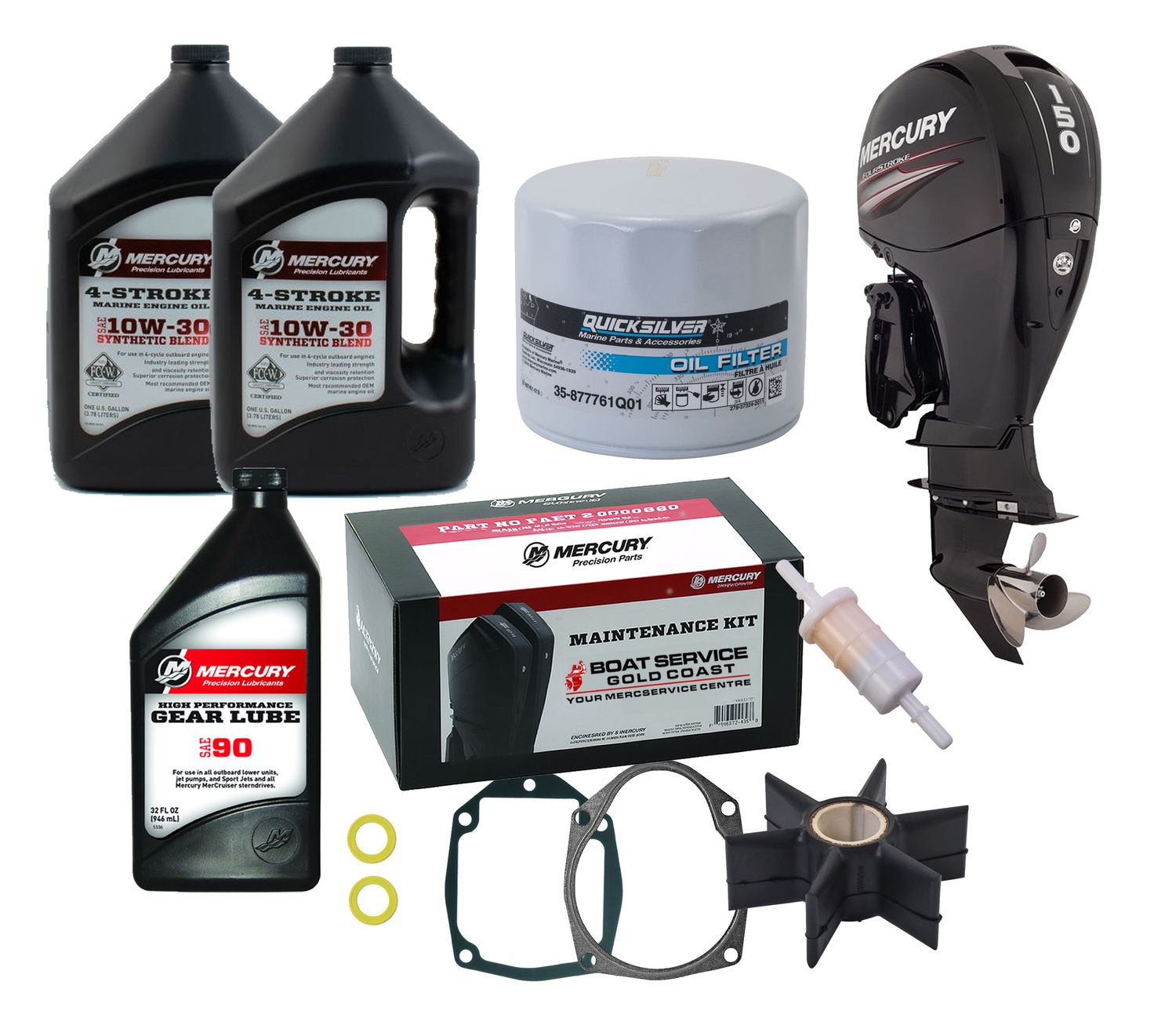
Service your Mercury 135 & 150 hp 3.0 L EFI FourStroke with genuine Mercury parts and lubricants. This kit includes oil, seals and service parts for one engine, with optional extras to suit your service.
For the naturally aspirated 3.0 L FourStroke family. The supercharged L4 Verado is a different engine and has a separate kit.
Standard inclusions
| Item | Quantity / contents | Part reference |
|---|---|---|
| Engine oil | 2 × 3.78 L Mercury 10W-30 | 8M0142151 |
| Gear lubricant | 1 × 946 mL High Performance gear lubricant | 858064K01 |
| Filter/seal service pack | 1 pack: oil filter, low-pressure fuel filter and 2 gearcase seals | 8M0094232; filter 877761Q01; fuel filter 879885Q; seals 8M0204693 |
| Impeller | 1 | 43026T 2 |
| Water-pump gaskets | 1 of each | 8172771; 8M0142616 |
Quantities are for one engine. Where a model or gearbox selector is provided, choose the matching version before adding the kit. Oils come in sealed retail bottles. Use the fill quantity and level-check procedure specified for your engine.
Choose your optional extras
Choose the extras you need from the options beside the Add to Bag button. The price updates with your selections. Items pictured in this section are optional unless listed in the standard inclusions above.
Thermostat kit 8M0090819 is available as an optional extra. Other extras include a water-pump kit upgrade, four ZFR5F spark plugs, alternator belt, trim-bracket anode, grease and gear-lube pump. Match the primary fuel-filter option to the fitted filter head and bowl.
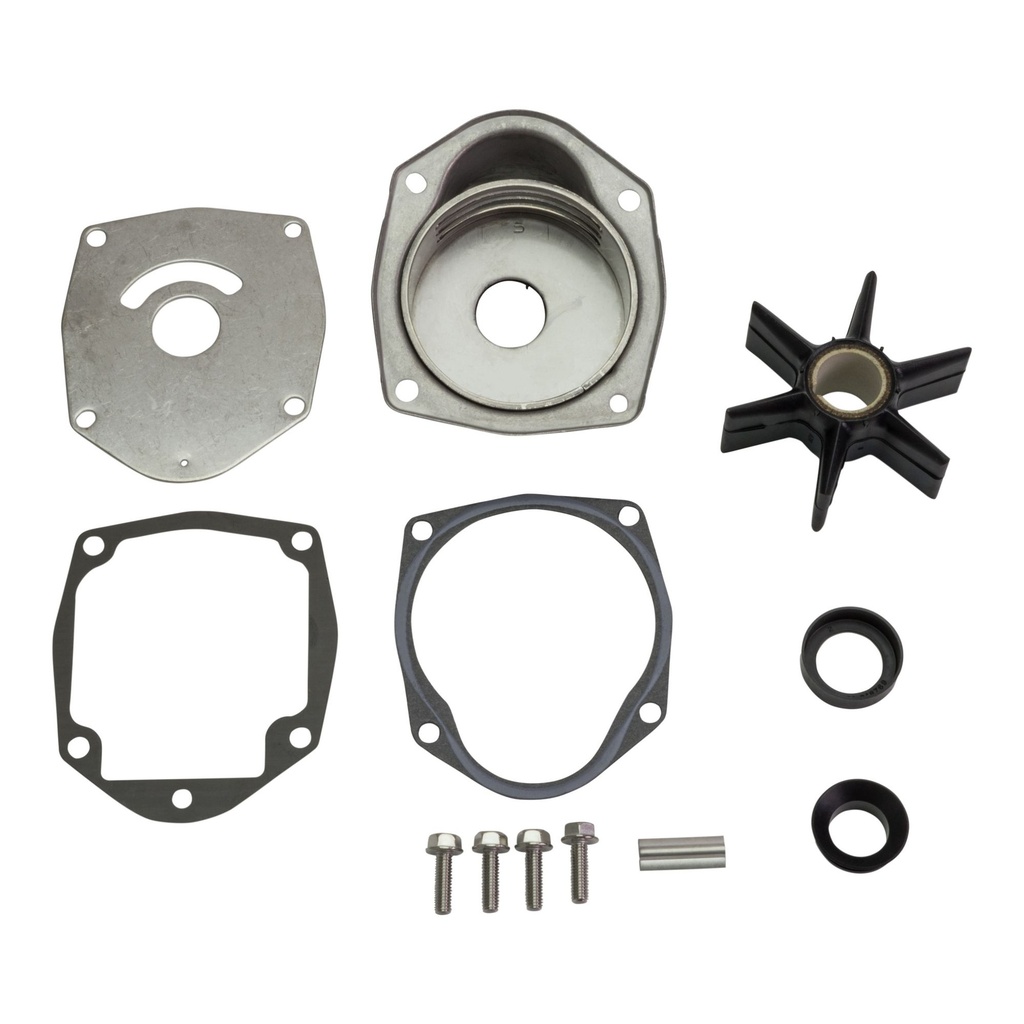 Full water pump kit incl housing, wear plate, key (817275A08)
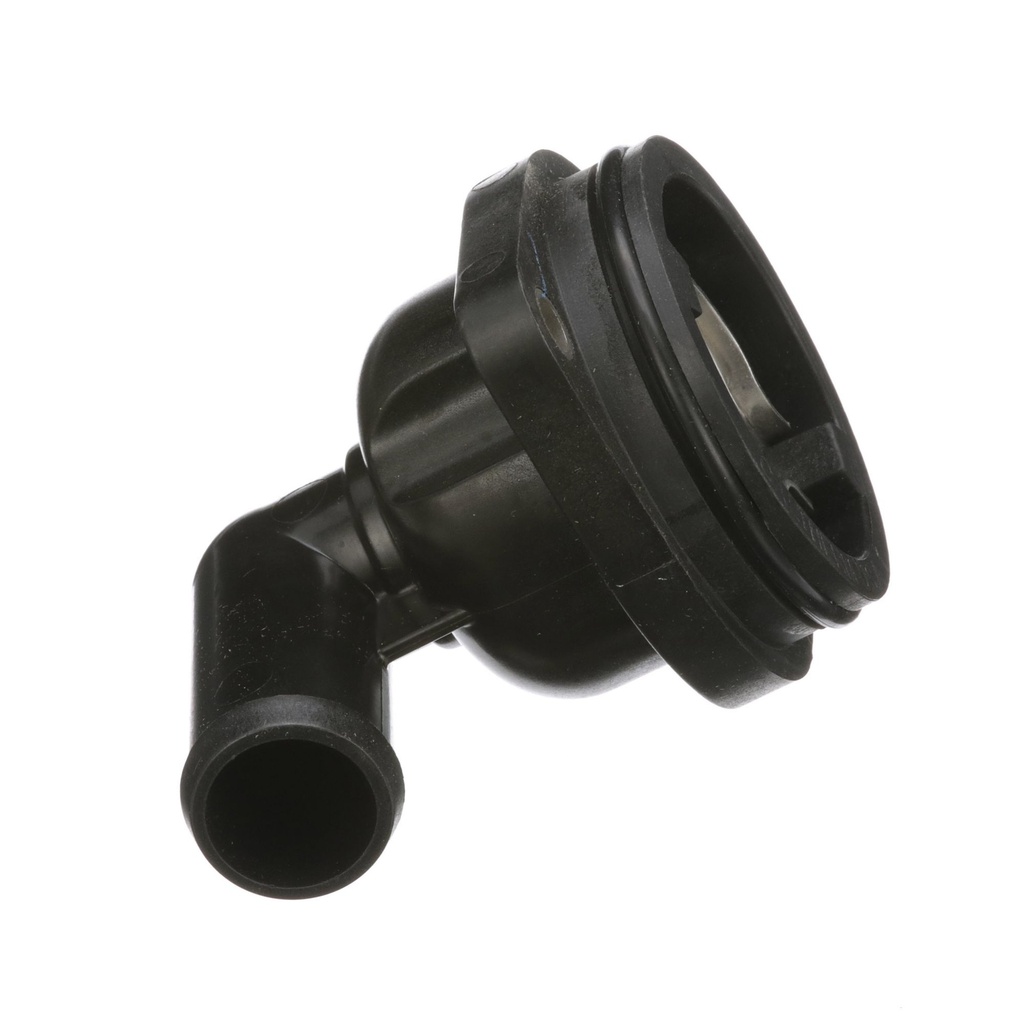 Thermostat kit (8M0090819)
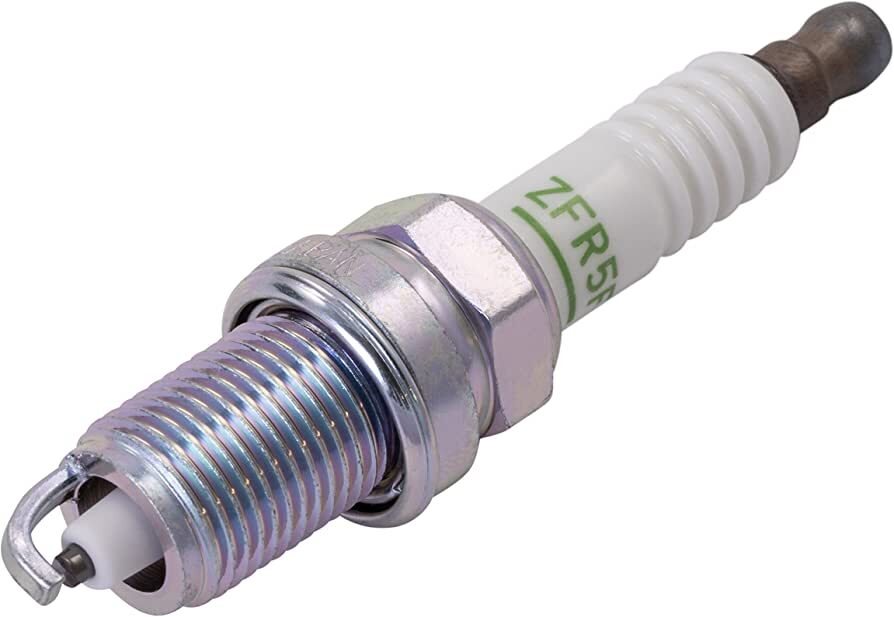 4x ZFR5F Spark Plugs (8M0057936)
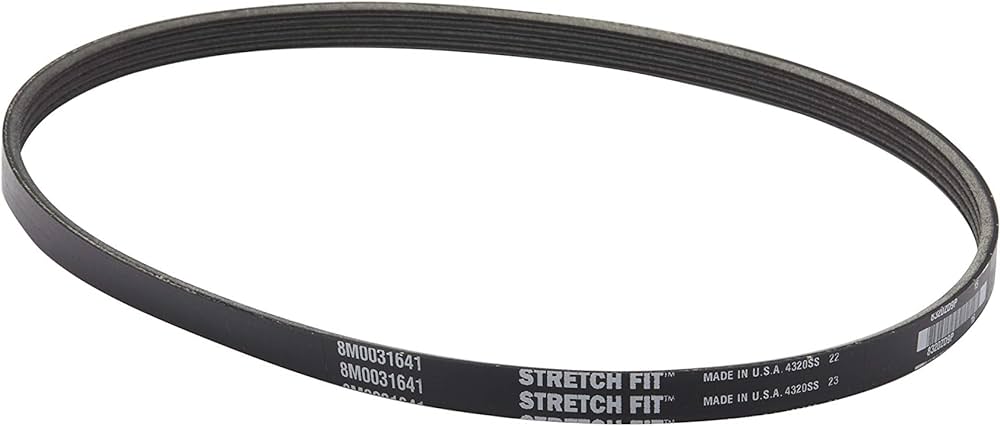 Alternator belt (8M0031641)
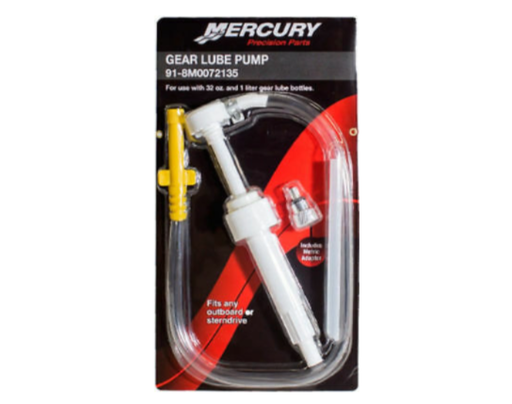 Gear oil pump incl adaptors 91 (8M0072135)
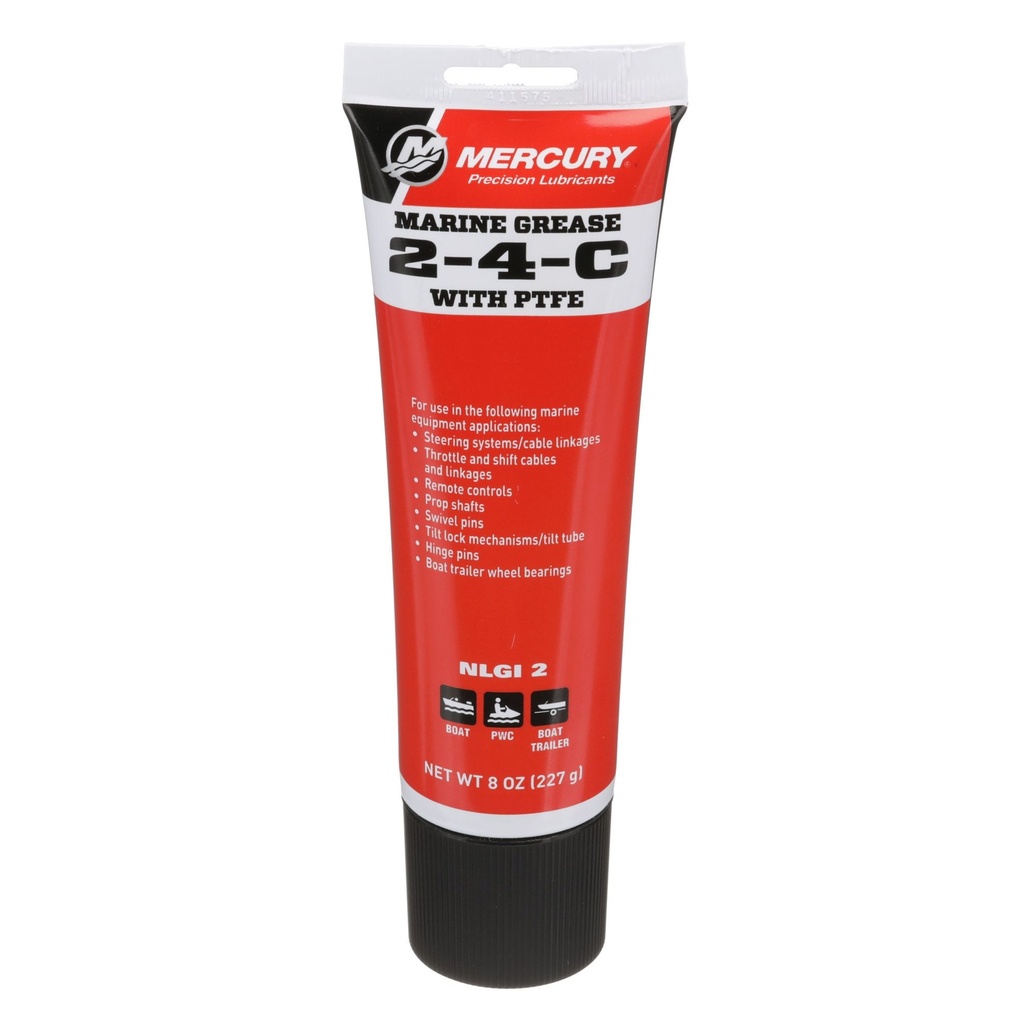 2-4-C marine grease (802859A 1)
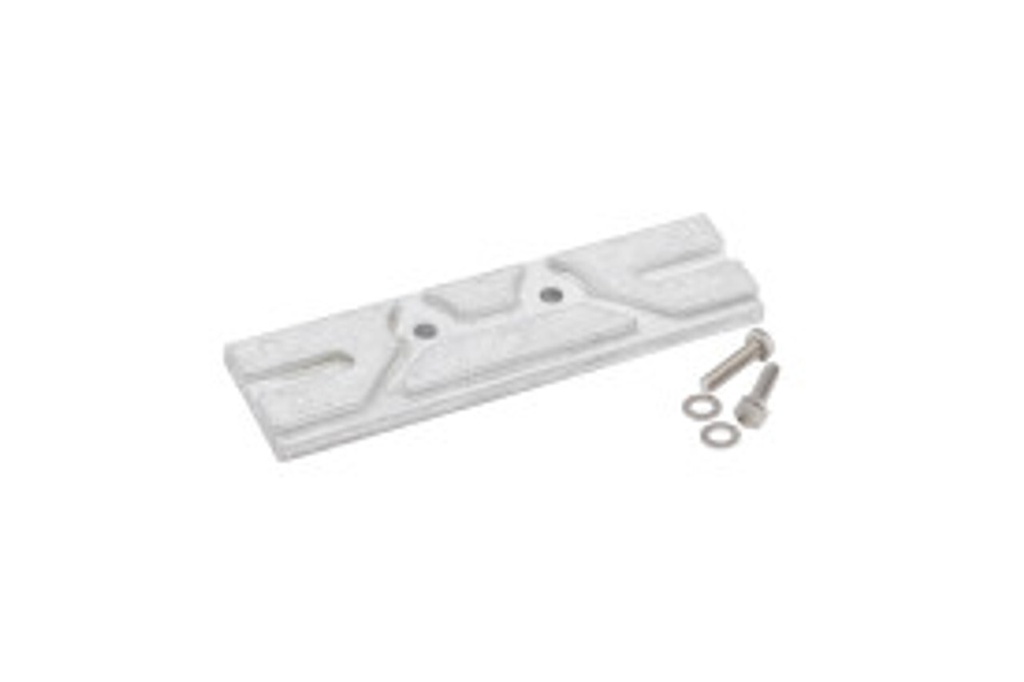 Anode - trim pump (97 8M0057772)
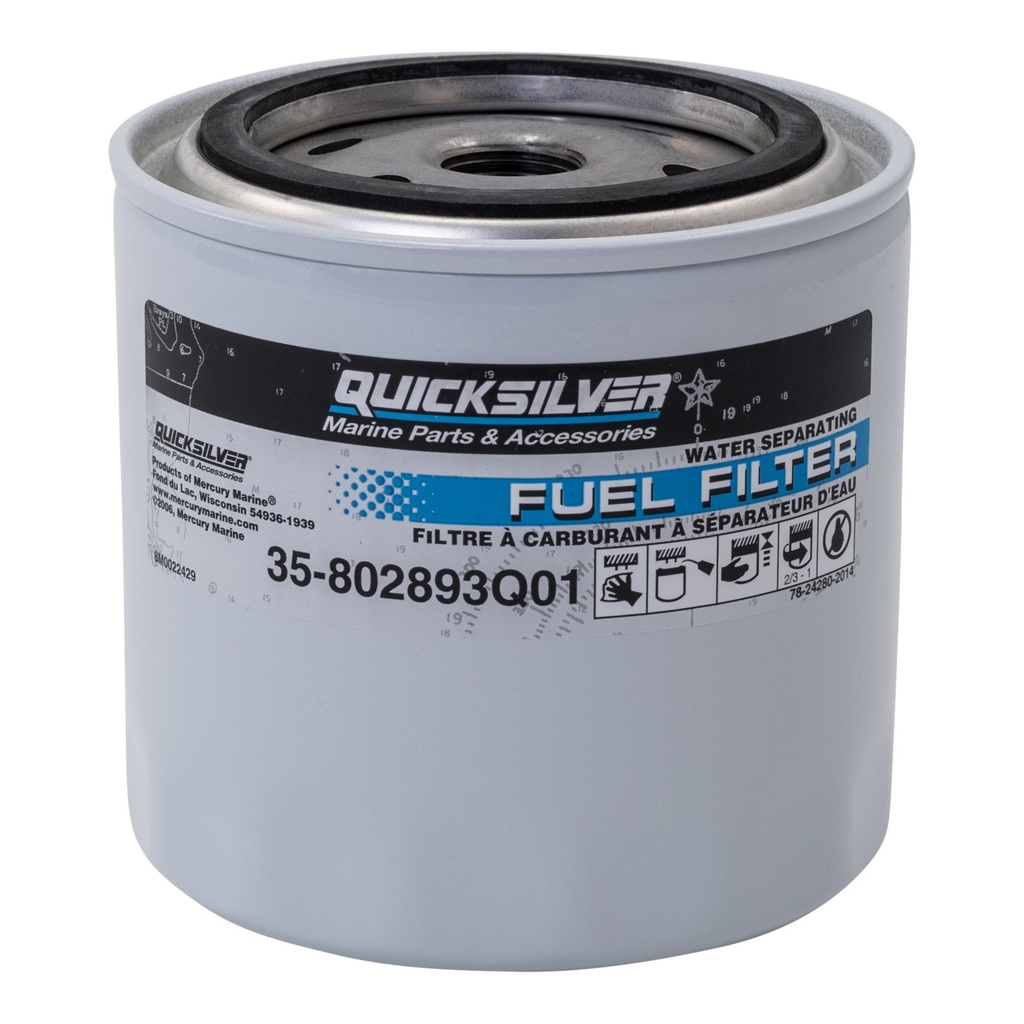 Off engine fuel filter 1 thread (802893Q01)
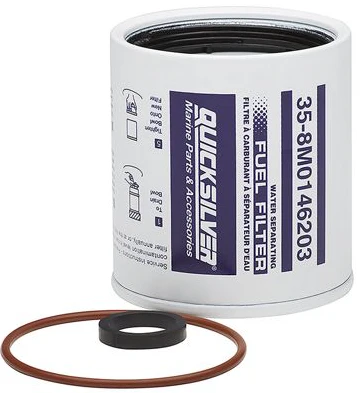 Off engine fuel filter 2 thread S3213 Racor (8M0146203)
Oil and gear-lubricant guide
| System | Service guide |
|---|---|
| Engine oil | Approximately 6.0 L |
| Gearcase lubricant | Standard right-hand: 830 mL. Left-hand: 545 mL through 2B172248, 830 mL from 2B172249. SeaPro: 830 mL. Pro XS: 970 mL. |
Capacities are approximate and vary with engine model and gearcase. Drain fully and use Mercury’s specified filling and level-check procedure. Check the dipstick with the engine positioned correctly, allow the specified settling time and do not overfill. Keep any unused oil for top-ups.
Useful service information
Cooling system and flushing
Flush with fresh water after use in salt, polluted or muddy water and rinse salt deposits off the exterior. We recommend a suitable earmuff-type flushing attachment where the engine and gearcase allow it, so the engine can run at idle and the thermostat can open. Use the correct attachment for all required water intakes, remove the propeller, select neutral and establish an adequate water supply before starting. Monitor cooling-water flow, never run above idle and stop the engine before turning off the water.
Static flushing alternative: Use the built-in flushing connection with the engine switched off. Connect the hose, use the flow specified in the manual (about half tap opening) and flush for approximately 15 minutes. Disconnect the hose and securely refit the connector/cap. Follow the fitted automatic system’s instructions if one is installed.
Some models need a separate coupling for a static flush. Match the attachment to the engine; a static-flush connection does not automatically supply enough water to run the engine. During water-pump service, inspect the housing, wear plate, key, gaskets and water-tube connection as well as the impeller.
Oil changes and gearcase care
Examine drained engine oil and gear lubricant for water, unusual metal or a strong fuel smell. Investigate contamination rather than simply refilling. Fit the correct drain/vent seals and check for leakage after service. When replacing the oil filter, ensure the old gasket has come off, clean the mounting face and lightly oil the new gasket with clean engine oil.
Inspect the alternator belt, thermostat, fuel hoses and cooling-water passages. Do not open the oil drain valve more than the manual’s 2½-turn limit.
Fuel filters and spark plugs
Inspect fuel hoses, connections, primer bulb where fitted, and filter condition. Work with the engine stopped and fuel ignition sources removed. Keep dirt out of open connections, prime the system as specified and check for leaks before use. Boat-mounted filters are separate from on-engine filters. Match the existing filter-head thread, bowl and water-in-fuel sensor arrangement; similar-looking spin-on filters are not automatically interchangeable. A bowl or sensor is not included unless the selected option says so.
Use the spark-plug type, gap and tightening procedure specified for the engine serial. Inspect plugs and boots for damage or corrosion and keep debris out of the plug wells. Select only the plug quantity that matches the engine.
Anodes, propeller and lubrication
Inspect anodes and replace them before they are consumed. Keep anodes and their contact surfaces free of paint or insulating coatings, and select an anode material suitable for the water in which the boat operates.
With the engine secured against starting, inspect the propeller and check behind it for fishing line. Check the shaft seals and retaining hardware, grease the specified surfaces and refit using the correct hardware and torque for that propeller system. Lubricate the steering, tilt and other points identified in the engine manual.
Service checks and storage
A complete service also includes checks of the stop-switch lanyard, steering and controls, transom mounting, accessible fasteners, fuel and cooling hoses, and battery connections where fitted. Check for leaks and normal cooling-water flow after the work.
For longer periods out of use, follow the engine’s fuel-treatment, lubrication, draining and storage-position instructions. Record the work and engine hours, and retain the parts receipts. Service needs vary with model, use and condition.
Need help choosing? Send Boat Service Gold Coast your engine serial number and a photo of the existing filter or gearcase if its type is unclear. We can help match the kit and optional parts before you order.
Refer to the Mercury manual for your engine serial number for full service procedures, safety instructions and tightening specifications. The kit price includes the parts and fluids shown above; workshop labour is separate.