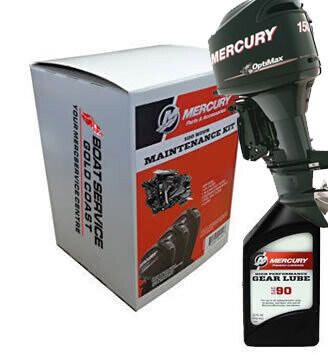
Service your Mercury 150 hp 2.5 L OptiMax with the listed Mercury/Quicksilver parts, gear lubricant and optional service extras.
For the 2.5 L V6 OptiMax application with the spin-on on-engine fuel filter. Check the serial and installed filter arrangement before ordering. The 1.5 L three-cylinder and 3.0 L OptiMax families use different parts.
Standard inclusions
| Item | Quantity / contents | Part reference |
|---|---|---|
| Gear lubricant | 1 × 946 mL High Performance gear lubricant | 858064K01 |
| On-engine fuel filter | 1 spin-on filter with sensor | 18458Q 4 |
| Oil-injection line filter | 1 | 875284T01 |
| Gearcase drain/vent seals | 2 | 19183 3 |
| Impeller | 1 | 89984T 3 |
| Water-pump gaskets | 1 of each; 8M0090319 replaces 85608 1 | 85824; 8M0090319 |
Quantities are for one engine. The 946 mL bottle is gear lubricant. Two-stroke engine oil is separate and can be added using the DFI oil option.
Choose your optional extras
Select extras beside the Add to Bag button; the price updates with your choices. The items shown below are optional unless included in the table above.
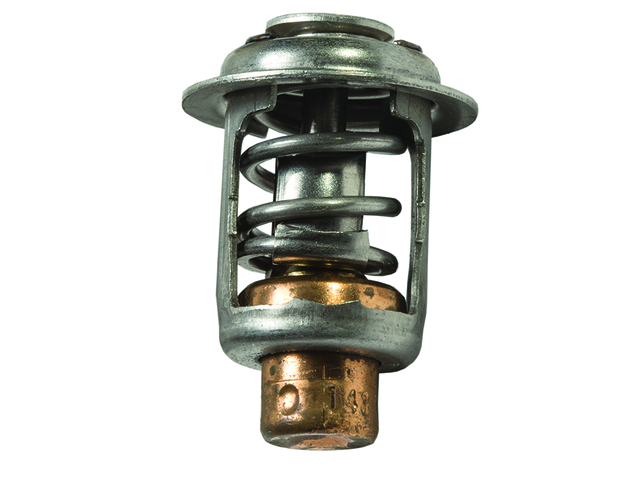
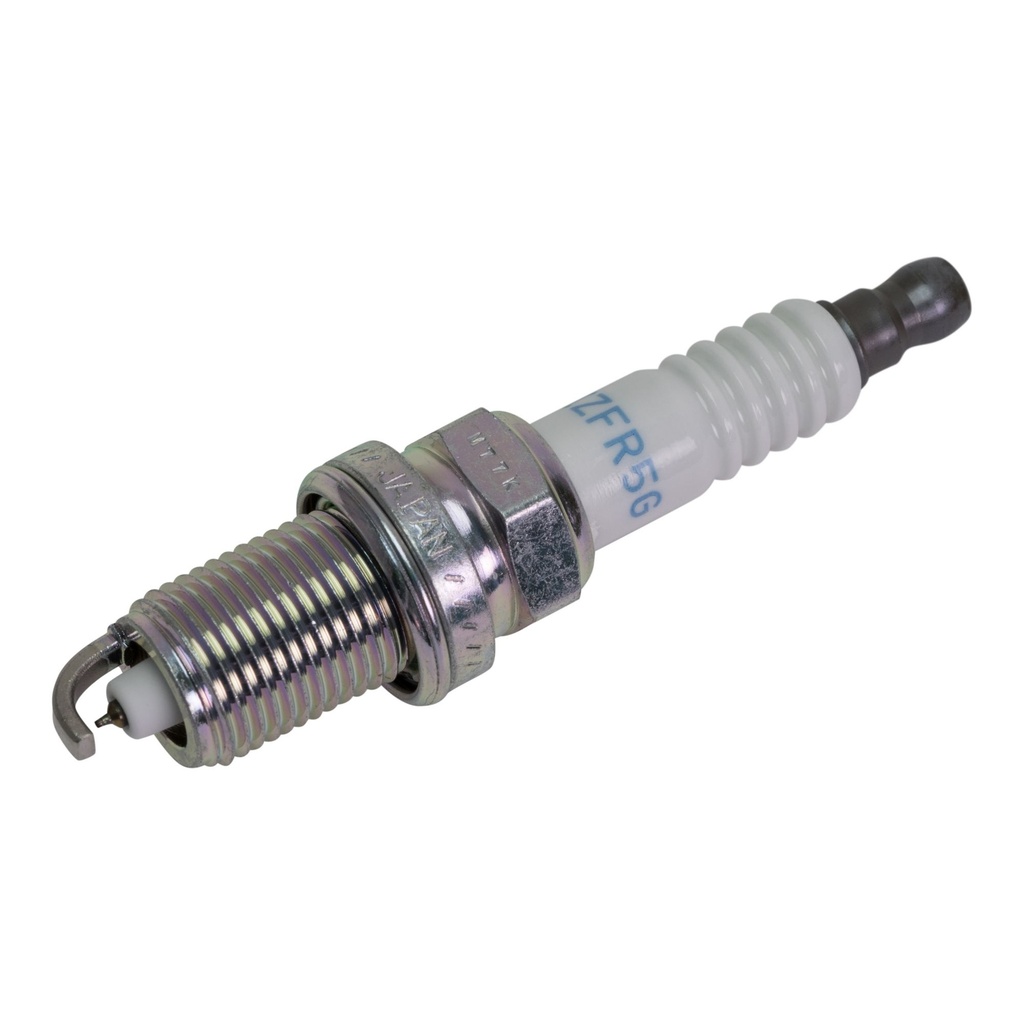
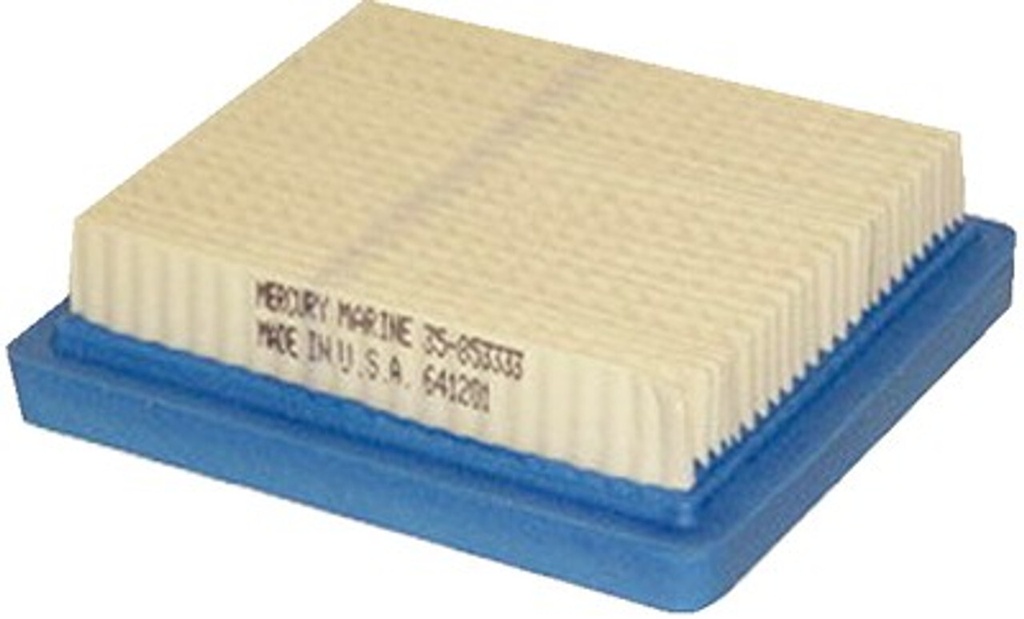
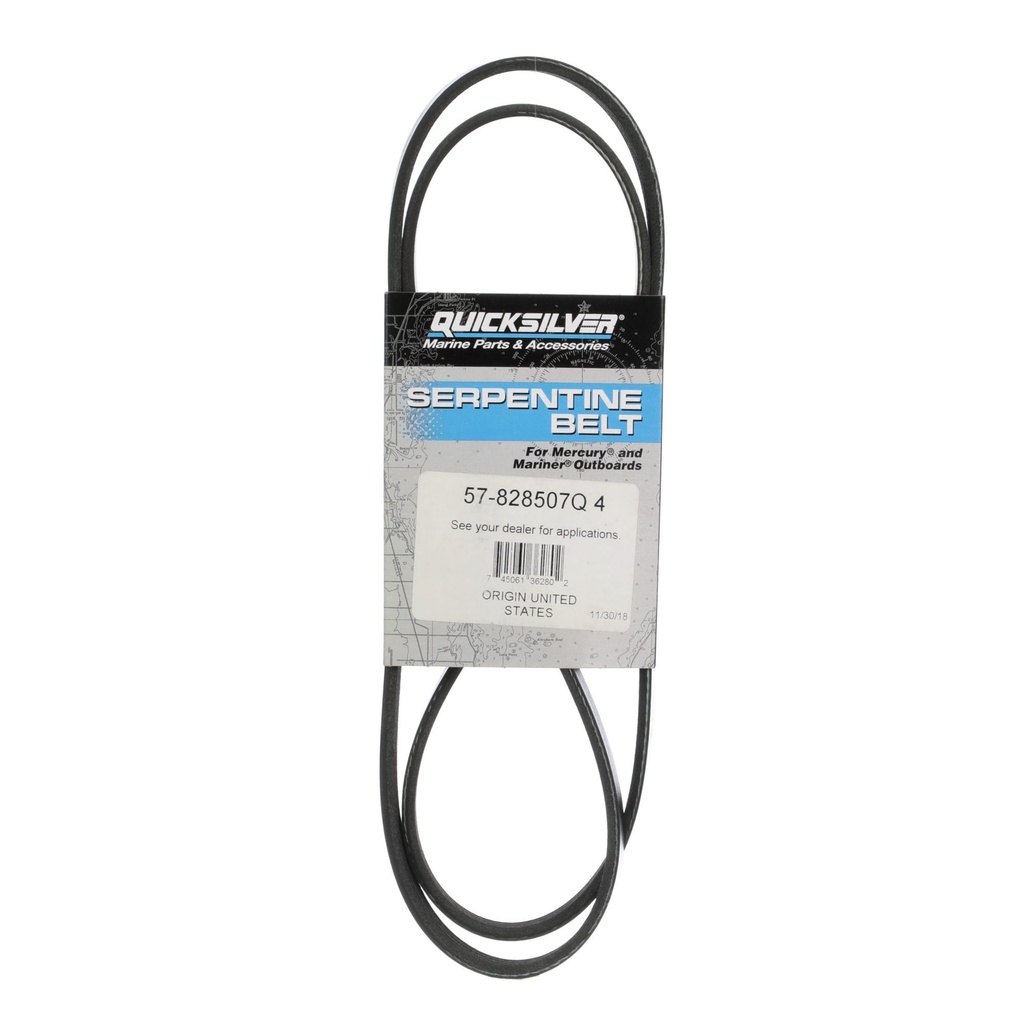
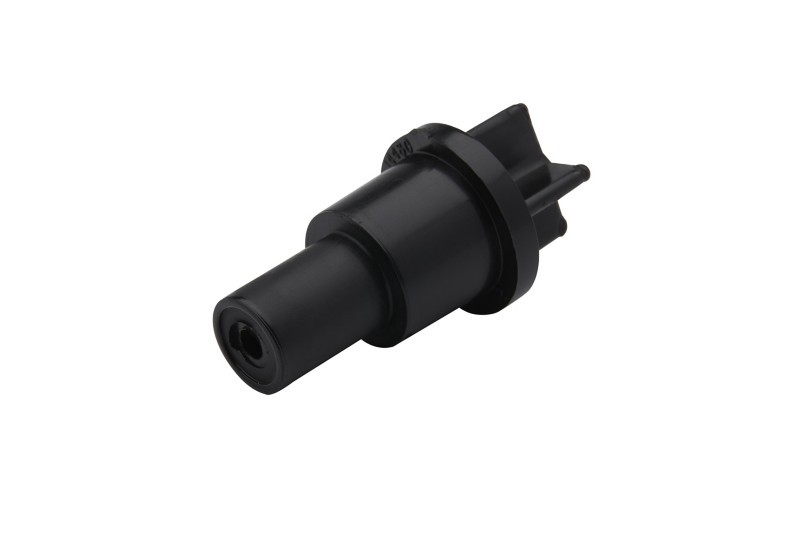
The spin-on fuel filter, inline oil filter and impeller are included. The thermostat option supplies two thermostats and two seals; the spark-plug option supplies six IZFR5G plugs. Compressor air filter, belt, fuel-pump diaphragm kit, poppet parts and DFI oil are separate extras.

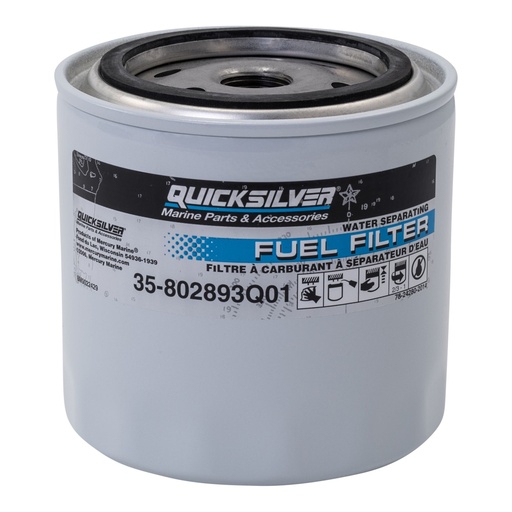
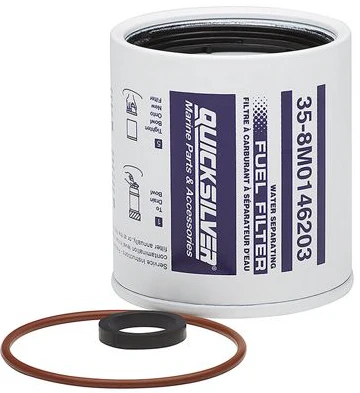

For a boat-mounted primary fuel filter, match the filter head and bowl: 802893Q01 is the no-bowl choice; 8M0146203 suits the separate bowl arrangement. The bowl is not included. These are additional to the on-engine filter in the base kit.
Fuel, oil and gearcase guide
| System | Service guide |
|---|---|
| Engine lubrication | Oil injection using Mercury OptiMax/DFI or Quicksilver DFI two-stroke oil. |
| Gearcase lubricant capacity | Approximately 0.666 L for the standard gearcase. |
Gearcase capacities are approximate. Use the specified filling and level-check procedure for your engine and gearcase; the size of the retail bottle is not a fill instruction. Two-stroke engines use oil in the fuel or oil-injection system, rather than a four-stroke sump-oil change.
Useful service information
Cooling system and flushing
We recommend a suitable earmuff-type flushing attachment so the engine can run at idle. Remove the propeller, select neutral and turn on enough fresh water to supply the cooling-water intakes before starting. Idle for 3–5 minutes while watching the tell-tale and water supply. Stop the engine before turning off the hose. Never run above idle or without adequate cooling water.
The bottom-cowl flushing fitting on this family can be used with the engine stopped or at idle, following its instructions. Keep hose pressure at or below 310 kPa (45 psi), flush for 3–5 minutes and refit the sealing plug. Confirm the installed gearcase intake arrangement before choosing earmuffs.
Flush after use in salt, muddy or polluted water and rinse salt off the exterior. During pump service, inspect the housing, liner, wear plate, key, gaskets and water-tube connection as well as the impeller.
Oil system and gearcase care
Inspect the remote oil tank, cap seals, hoses and engine-mounted reservoir. Remote-tank caps must seal properly for oil delivery. After replacing the inline oil filter or opening the oil system, complete the applicable priming/bleeding procedure before running the engine.
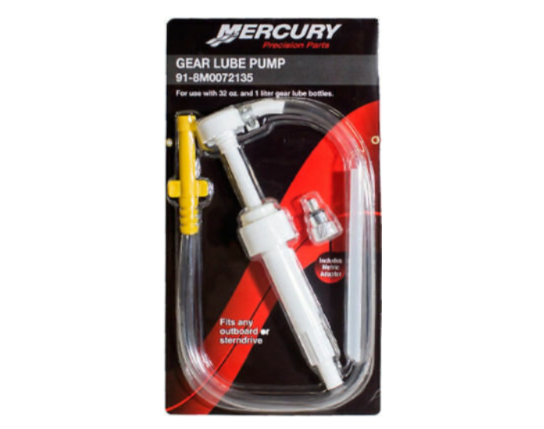
Keep the outboard upright and fill through the lower drain hole until lubricant reaches the upper vent, following the instructions for the fitted gearcase. Close the vent before disconnecting the filling pump. Renew the appropriate plug seals and check for leaks. Milky lubricant, free water or larger metal particles need investigation.
Fuel system and spark plugs
Inspect the on-engine water-separating filter for water or debris. Reconnect its sensor lead after servicing, prime the fuel system and check the filter seal for leaks. Also inspect the boat’s primary filter if fitted. Six IZFR5G plugs are offered for this application; confirm the serial-specific plug and gap before installation.
Belt, compressor filter and corrosion checks
Service the compressor air intake filter and refit its cover correctly; never run without the filter. Inspect the alternator belt and lubricate the tensioner pivot as specified. Check both thermostats and the poppet valve when investigating cooling problems. Inspect the battery terminals and use the correct marine starting battery.
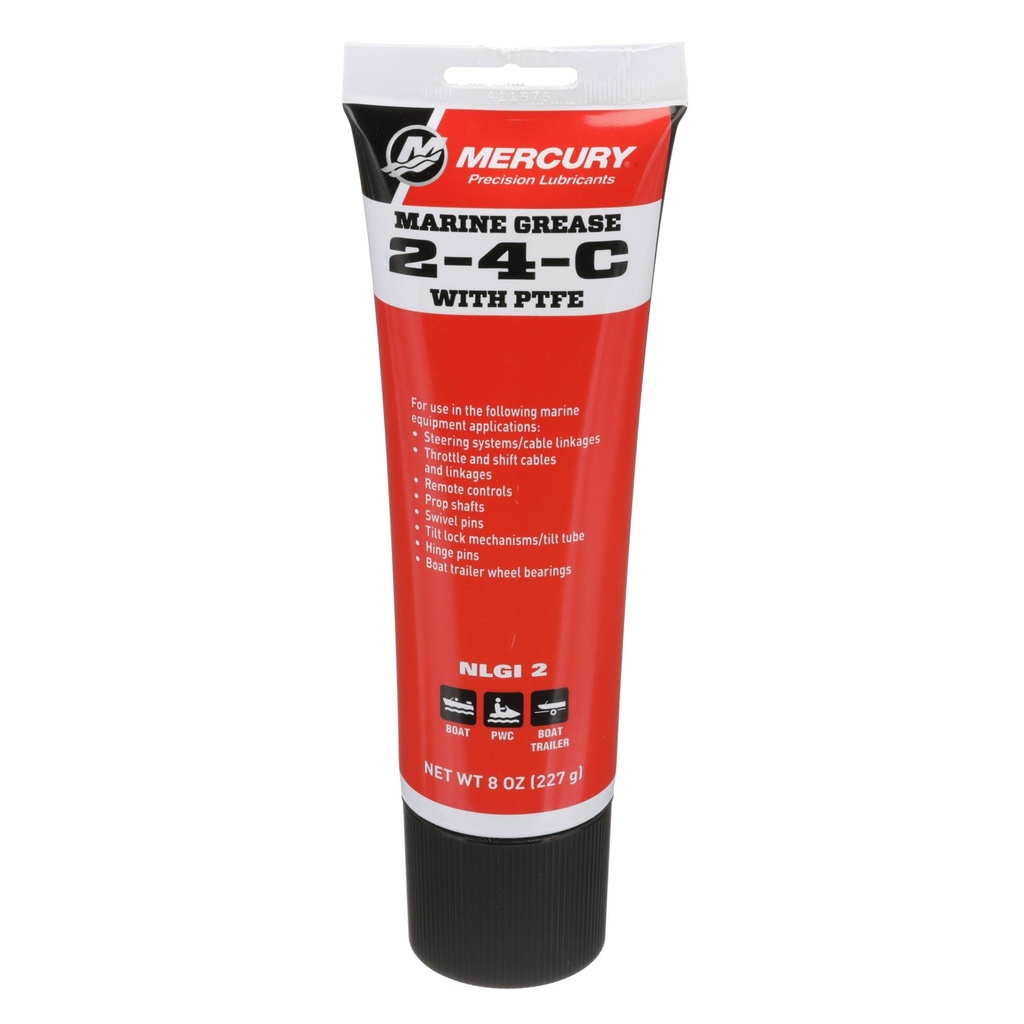
Inspect anodes regularly, especially in saltwater; replace worn anodes and keep them free of paint, grease and other insulating coatings. With the engine secured against starting, remove the propeller to check for fishing line, seal damage and worn retaining hardware. Grease the specified shaft surfaces before refitting.
Service checks and storage
Prepare the fuel system and cylinders using the OptiMax storage procedure. Protect the cylinders through the spark-plug openings as directed, renew the gear lubricant and lubricate the specified points. Keep the engine upright to drain and maintain the battery during long periods out of use.
A complete service also includes the lanyard stop switch, steering and controls, transom mounting, hoses, accessible fasteners and battery connections where fitted. Check for fuel or gear-oil leaks and normal cooling-water flow after servicing. Keep a record of the work and engine hours.
Need help choosing? Send Boat Service Gold Coast your engine model and serial number, plus a photo of any part or gearcase you are unsure about. We can help match the kit and optional extras before you order.
Use your engine’s serial-specific Mercury manual for complete procedures, tightening specifications and service requirements. Kit pricing covers the listed parts and fluids; workshop labour is separate.